
Texas Auto Insurance Requirements: What 30/60/25 Actually Covers
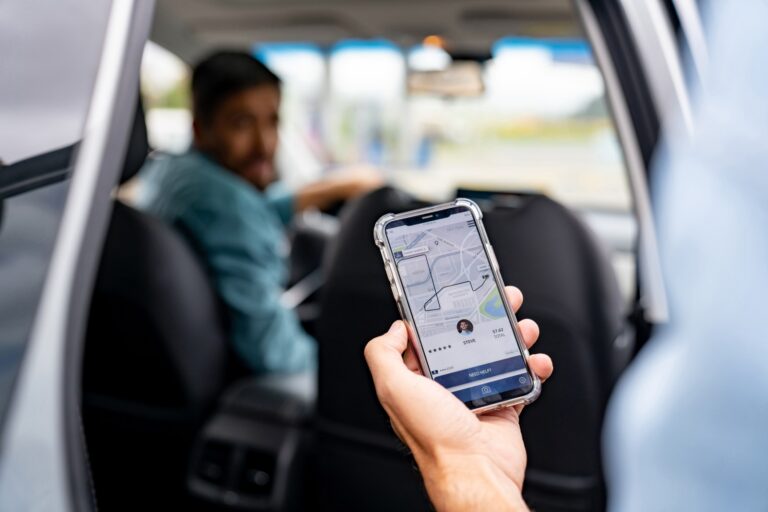
Texas requires every driver to carry at least $30,000 of injury coverage per person, $60,000 per crash, and $25,000 for property damage. That is the 30/60/25 minimum. It is a legal floor rather than a sensible amount of coverage, and it is a great deal less than a serious injury costs. A driver working for a rideshare app is covered by an entirely different set of minimums — up to $1 million once a ride has been accepted.
The short version
- The Texas minimum is 30/60/25 — $30,000 per injured person, $60,000 per crash, $25,000 for property damage.
- Those figures are set by Section 601.072 of the Transportation Code and have not moved since 2011.
- Your policy also carries $2,500 of personal injury protection unless you rejected it in writing.
- Insurers must offer uninsured and underinsured motorist coverage. You can decline it, but only in writing.
- A rejection sticks. Once you decline that coverage it does not reappear at renewal unless you ask for it in writing.
- The minimum is built for a fender bender. It is not built for surgery.
What Texas actually requires
Every driver in Texas has to show financial responsibility, and almost everyone does it by buying liability insurance. The required minimum is written into Section 601.072 of the Transportation Code, and it has three parts:
- $30,000 for bodily injury to one person in a crash.
- $60,000 for bodily injury to everyone in a crash, in total.
- $25,000 for damage to someone else’s property.
Shorthand: 30/60/25. The Texas Department of Insurance publishes the same figures in its consumer guide.
Two things about that middle number surprise people. It is a ceiling for the whole crash, not a payment to each person, so if four people in a car are hurt they are dividing $60,000 between them. And all of it is liability coverage, which means it pays other people for harm the policyholder caused. It does nothing for the policyholder’s own injuries.
The amounts have not changed since January 1, 2011. Medical costs have.
What 30/60/25 covers in a real crash
Thirty thousand dollars sounds like a lot until you price out a single bad day.
An ambulance ride, an emergency room visit, a CT scan and an MRI can consume a large share of $30,000 before anyone has discussed surgery, physical therapy or a day of missed work. If the injury turns out to need surgery, the minimum policy is exhausted long before the treatment is finished.
That is the honest shape of it. The Texas minimum is adequate for a low-speed wreck with bruising and a repair bill. It is not adequate for a broken bone, a disc injury or anything requiring an operating room — and it is the coverage a significant share of drivers on Houston freeways are carrying, because it is the cheapest lawful option.
Which raises the question nobody thinks about until it happens: if the person who hits you carries exactly the minimum and your bills are three times that, where does the rest come from?
The $2,500 you may not know you have
Start with your own policy, because there is probably something in it you have forgotten about.
Under Section 1952.152 of the Insurance Code, an insurer cannot issue an auto policy in Texas without including personal injury protection. It is in your policy by default. It only comes out if you rejected it in writing. Section 1952.153 then caps what the insurer is obliged to provide at $2,500 per person, which is why that is the figure most policies carry.
PIP is quietly useful. It pays your medical bills and a portion of lost income regardless of who caused the crash, and it pays early rather than at the end of a settlement. It is not much money, but it arrives when nothing else has.
Pull out your declarations page and look. Most people genuinely do not know whether they have it, and it is one line on the page. While you are there, it is worth understanding who actually pays your medical bills after a Texas crash, because the answer is rarely the person who hit you, and rarely quickly.
The coverage that matters most, and the trap inside it
Uninsured and underinsured motorist coverage — UM/UIM — is the part of your policy that steps in when the driver who hurt you has no insurance, or not enough of it. For a serious injury caused by a minimum-limits driver, it is usually the difference between being made whole and not.
Section 1952.101 requires every insurer to offer it, at least at the Chapter 601 limits. You are allowed to turn it down. The rejection has to be in writing.
Here is the part that catches people, and it is worth reading twice. Under subsection (c), once you have rejected that coverage in writing, the insurer is not required to offer it again on any renewal or reinstated policy. The rejection carries forward silently, year after year, unless you write to them and ask for the coverage back.
So somebody who declined UM/UIM in 2019 to save a few dollars a month has almost certainly not been offered it since, and may well believe they have it. They find out they do not in the week they need it most.
It costs very little. If you do nothing else after reading this, check that line on your declarations page.
When the other driver’s minimum is not enough
If you are already hurt and the at-fault driver turns out to have 30/60/25, the liability policy is not the end of the inquiry. It is the beginning of it.
- Your own UM/UIM coverage, if you have it, sits on top of theirs.
- Another liable party. If the driver was working at the time, their employer may be responsible. If the vehicle belonged to someone else, that can matter. A commercial vehicle changes the picture entirely — those policies start far higher than 30/60/25, which is why a truck case is a different kind of case.
- Your health insurance, which almost always pays less for the same treatment than a provider billing an injury claim.
- A letter of protection, if you have no health coverage at all. It gets you treated now and is paid from the settlement — but read what one actually commits you to before signing.
Two other things are worth doing early, because they are easier now than later. Get a copy of the CR-3 crash report, which names every driver, vehicle and insurer involved. And if an adjuster calls asking to record you, know what that conversation is for before you agree to it.
Fault also decides all of this, because Texas is not a no-fault state. Nobody pays until responsibility is assigned, and if you are found more than half at fault you recover nothing at all.
Questions people actually ask
What is the minimum car insurance required in Texas?
$30,000 for injuries to one person, $60,000 for all injuries in one crash, and $25,000 for property damage — written as 30/60/25. The requirement comes from Section 601.072 of the Texas Transportation Code.
What does 30/60/25 actually mean?
The first number is the most the policy pays for any one injured person. The second is the most it pays for everyone injured in that crash combined. The third is the most it pays for damage to property, which usually means the other vehicle.
Is personal injury protection required in Texas?
It is included automatically. A Texas insurer cannot issue an auto policy without providing PIP unless the named insured rejects it in writing. Insurers are not required to provide more than $2,500 per person, so that is what most policies carry.
Do I have to buy uninsured motorist coverage in Texas?
No, but your insurer has to offer it, and you can only decline it in writing. Once declined, the insurer is not obliged to offer it again at renewal — so a rejection made years ago is probably still in force today.
What happens if the driver who hit me only had the minimum coverage?
Their policy pays up to its limit and then stops. After that you are looking at your own underinsured motorist coverage, any other party who shares responsibility, and your own health coverage. Which of those applies depends on the facts of the crash.
Is the Texas minimum enough coverage?
For a minor collision, usually. For anything involving surgery, an extended hospital stay or long-term treatment, no — and the limits have not been raised since 2011.
Client Reviews
Knowing what your policy really covers, before you need it.
Most people learn what their coverage is worth at the worst possible moment. These clients had someone read both policies — theirs and the other driver’s — and tell them plainly.
From the beginning, Drew explained the entire process to me and it went exactly as he predicted. He always kept us updated and looked out for our best interest. Always gave us his advice while letting us make the decision.
I’m incredibly grateful for the support and dedication my attorney Mr. Shirley showed throughout my auto injury case. From the very beginning, they kept me informed, answered every question, and truly fought to make sure I was treated fairly.…
After my accident, I was overwhelmed, stressed, and unsure about what to do next.… Every time I had questions or felt anxious about the process, they were patient, reassuring, and always kept me updated.…
Related reading
- What to do if your Uber gets in an accident — why the driver’s app status decides whether $50,000 or $1 million sits behind the claim.
- Who pays your medical bills after a Texas crash — why the at-fault driver’s insurer pays once, at the end, and what covers you in the meantime.
- Is Texas a no-fault state? — why fault decides everything here, and the 51 percent rule that can end a claim outright.
- What is a letter of protection? — how to get treated with no health insurance, and what it costs you at the end.
If you were hit by someone carrying the state minimum and your bills are already past it, that is worth a conversation before you accept anything. I will look at both policies — theirs and yours — and tell you plainly what is actually available to you. That costs nothing. If the crash happened anywhere in the Houston area, start with how a Houston car accident claim works.
Where to find me
The office is at 4900 Woodway Drive, Suite 900, in Uptown Houston, just inside the 610 Loop. Most of this can be handled over the phone — but if you would rather sit down with the paperwork in front of you, the door is open.
This article is general information about Texas auto insurance requirements. It is not legal advice about your situation, and reading it does not create an attorney-client relationship.